A two- to four-minute digital story can move an audience, spark conversation, and inspire change. But when we watch the finished video, it is easy to overlook everything that went into creating it: weeks of writing and revision, careful listening, thoughtful feedback, creative collaboration, reflection, and vulnerability.
The digital stories created through the Nurse Narratives Initiative are poignant and powerful, but they represent only part of the initiative’s impact on the nurses who participated. A story alone does not automatically create empathy, connection, or a stronger team. And for these nurses, the story was only the beginning.
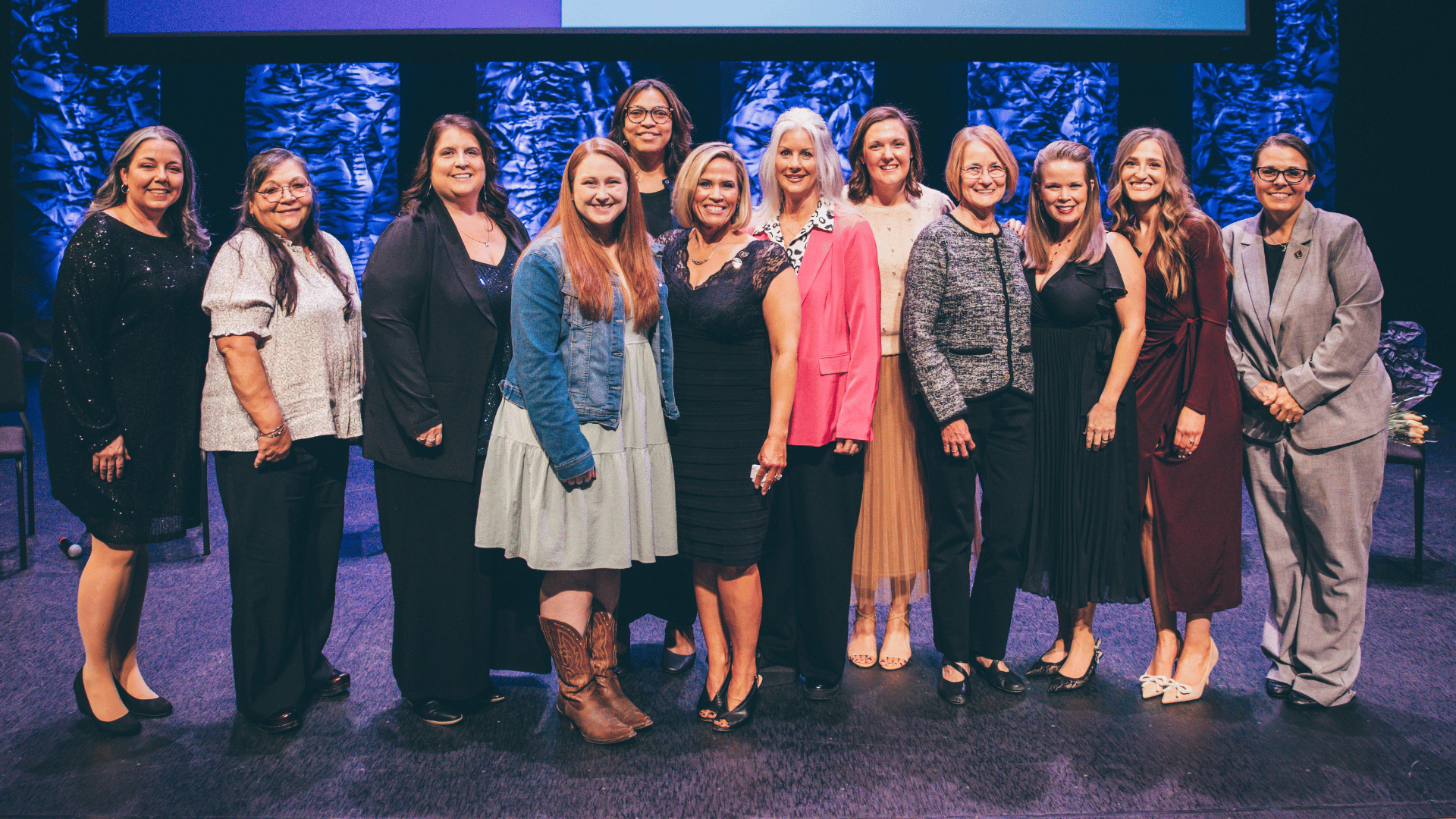
The Nurse Narratives Initiative brings together several parts of East Tennessee State University: StoryCollab, the College of Nursing, the Tennessee Center for Nursing Advancement, and the ETSU Research Corporation. Made possible through the generous support and partnership of Ballad Health, the initiative combines digital storytelling workshops, facilitated reflection, and curricular innovation to cultivate empathy and reinforce resilience in nursing. Participants are given a structured space not only to tell their own stories, but also to listen, reflect, and respond to the experiences of their colleagues.
In interviews with four ETSU nursing faculty members, we heard repeatedly that this shared process mattered as much as the stories it produced. The workshops gave participants opportunities to see one another beyond their titles, reconsider assumptions about longtime colleagues, rediscover a sense of belonging, and reconnect with what they shared as nurses. Their experiences show that the power of storytelling lies not only in what is told, but also in what happens when people tell, listen, and reflect together.
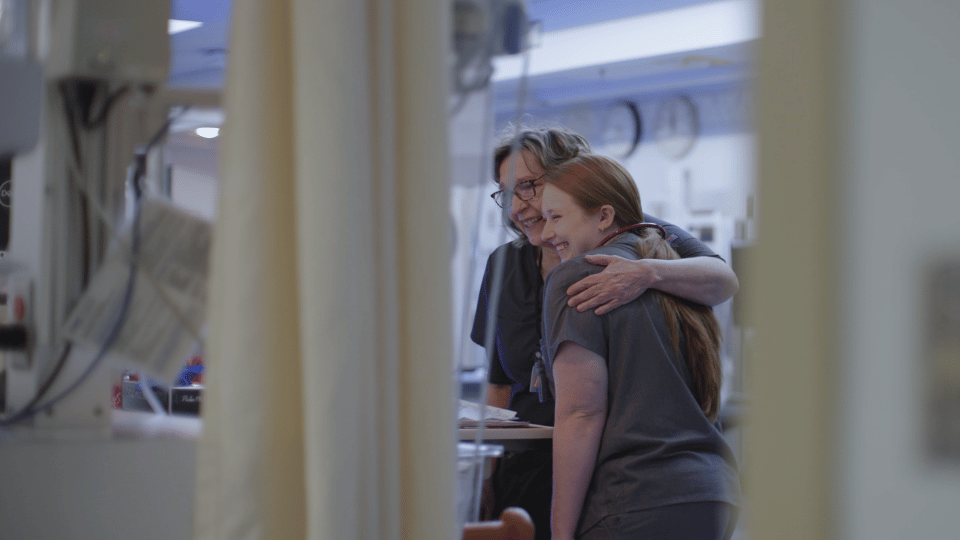
The initiative and some of its participants are also featured in NURSE: Empathy Heals, a documentary filmed during a three-day digital storytelling workshop and public screening. The film follows nurses as they develop first-person narratives about the experiences that have shaped their work and lives.
A digital storytelling workshop begins before anyone presses “record"
In a StoryCollab digital storytelling workshop, participants do more than record a personal account. Each person identifies a formative experience, writes and shares a first-person narrative, receives feedback through a group process, records the narration, and works with facilitators to shape it into a short digital story.
The completed video is the visible result, but much of the relational work happens behind the screen.
For Melessia Webb, Director of Quality Improvement and Associate Professor at East Tennessee State University College of Nursing, that process allowed her to acknowledge emotions that had gone previously unexpressed. During an early workshop session, participants were invited to read what they had written aloud.
“Whenever I had to read my own story, I couldn’t even get through it. I had no idea that it had that much impact on me. I had never been able to process what had happened until that moment.”
Webb had initially hesitated to participate because she did not believe she had time. A friend encouraged her to reconsider, suggesting she might be carrying an experience she had never had an opportunity to process. For Melessia, it was not just the writing, but the sharing of her story that helped her recognize how deeply the experience had affected her.
Tabitha Quillen, Clinical Assistant Professor and Student Success Educator at ETSU College of Nursing, entered the process with a different expectation. She signed up with the intention of creating a story that could show students the realities of day-to-day nursing. But by the end of the workshop, the story had become a lot more than just an educational resource.
“What I came out of that with was closure for myself, and a better understanding of who I am because I am a nurse, and an empathy toward myself—which I did not have before.”
She also did not anticipate the impact her story would have on those beyond her students. At the celebratory final screening of all the participants' stories, her aunt approached her, explaining that she had never considered how the experience in Quillen’s story had affected her personally. This acknowledgment not only affirmed all of the effort that went into her video, but made her experience feel heard.
Their testimonies suggest that the significance of a digital storytelling workshop lies not only in the final product, but also in the journey of creating it. With agency over what they share and support throughout the process, participants have time to reflect on their experiences, speak them aloud, listen to one another, and sometimes discover meanings they had not recognized before.
Listening Stops Us From Making Assumptions
Many colleagues come to know one another through professional shorthand: title, specialty, credentials, responsibilities, habits, and performance. But these categories often fail to encapsulate the whole person behind the role.
Webb described herself as direct, policy-oriented, and accustomed to a world of rules and requirements. Before Nurse Narratives, she sometimes saw a coworker “as more of a position than a person.” But hearing her colleagues' stories helped heal that separation, unveiling their humanity and strengthening their relationships.
“As I heard people read their stories out loud—I mean, people I’d worked with for years—I knew nothing of what they were dealing with. As they were sharing their stories, we all cried. We hugged each other. It was just such an eye-opener as to why people function the way that they do.”
Karen Carver, Assistant Professor at ETSU College of Nursing, observed a similar difference between knowing what a colleague has accomplished, and truly understanding the person behind those accomplishments. Nurses and faculty members often learn to project competence because other people depend on them– suppressing their fear, grief, exhaustion, and uncertainty behind an impenetrable exterior. The workshops, Carver reflected, gave participants space to lower some of those walls and speak honestly, revealing “the raw, true human beneath” the professional identity.
The attentive listening built into the workshops encouraged participants to encounter one another as more than their titles, responsibilities, or professional output. Other healthcare organizations have created similar opportunities for staff to step outside their usual roles and reflect together on the emotional demands of their work. One such approach, Schwartz Center Rounds, brings healthcare workers together to share personal experiences with colleagues in a confidential, facilitated group setting (McCarthy et al., 2021).
McCarthy and colleagues interviewed 50 healthcare workers who had presented during these gatherings. Participants described making fewer negative assumptions about colleagues and experiencing greater trust, tolerance, and compassion (McCarthy et al., 2021). Reflecting on why the process mattered, the researchers wrote: “This enabled them to show their vulnerability, which facilitated human connection, promoted audience response and reflections and allowed staff to gain new insights” (McCarthy et al., 2021).
Preparation, facilitation, and the audience’s response all influenced participants’ experiences. Like the ETSU interviews, these findings suggest that sharing a story is not enough on its own; how people are supported as they tell, hear, and reflect on that story also matters.
Reflection Transforms Recognition into Meaning
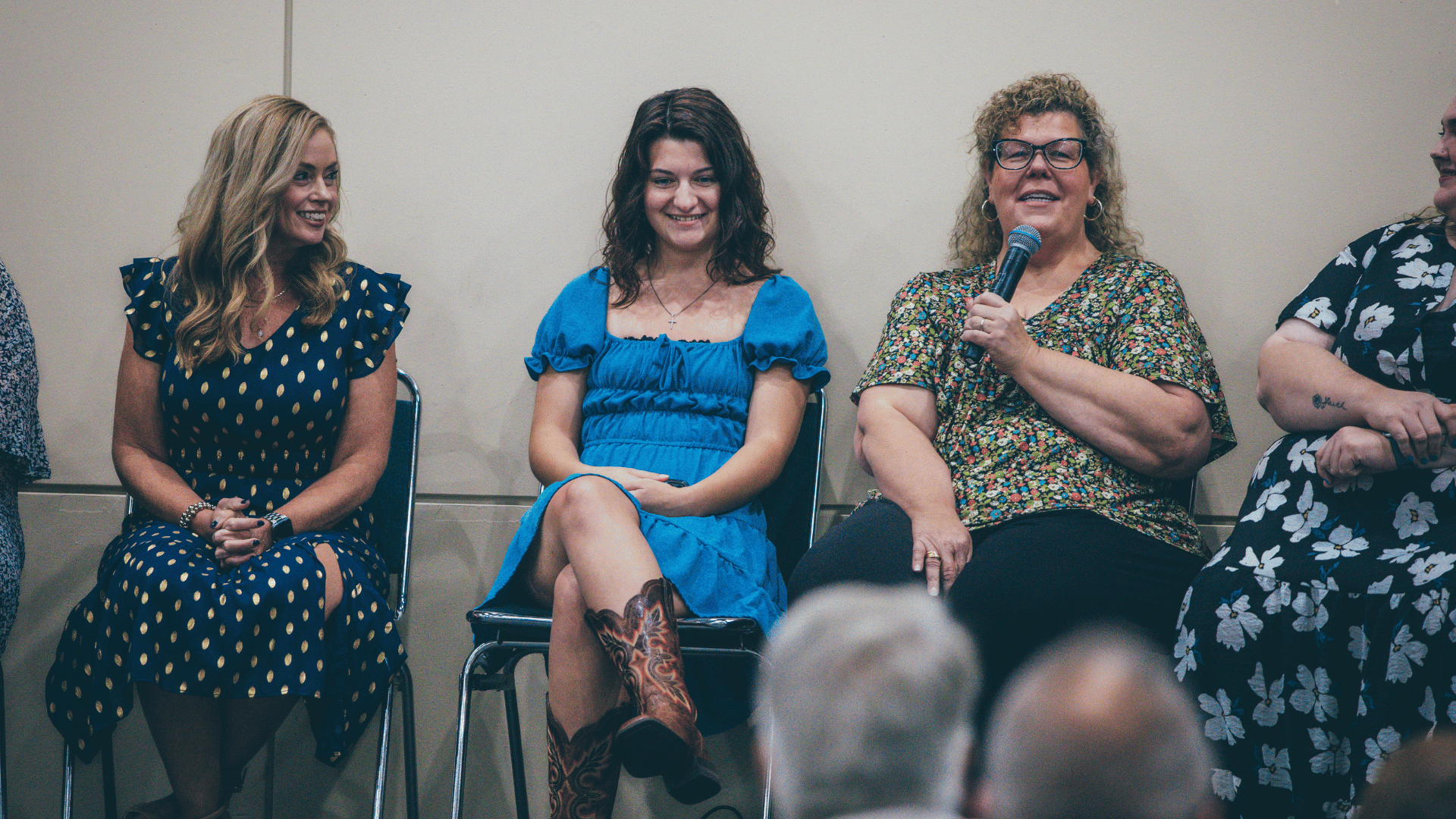
A story can produce an immediate emotional response. Facilitated reflection invites a group to stay with that response—to explore why the story resonated, connect it with their own experiences, and discuss its implications outside of the story circle, particularly in the workplace. In this way, an individual story can become the beginning of a much larger conversation.
Stephanie Cook, Chief Nursing Officer and Associate Administrator at Franklin Woods Community Hospital in Johnson City, TN, saw storytelling create camaraderie across age difference and experience. As seasoned nurses spoke honestly about difficult moments in their careers, younger nurses were able to recognize that their own struggles were not evidence that they did not belong in the profession.
“The Nurse Narratives Initiative, in my opinion, brought a lot of camaraderie between nurses and multiple generations.”
Cook also described the importance of speaking with someone who has lived through a similar professional experience. A family member may listen compassionately, she explained, but another nurse can say, “That happened to me,” and respond from a place of shared understanding. That recognition can reassure nurses that their burdens are not theirs alone to carry.
Melessia Webb identified a critical gap in how the nursing profession makes room for this kind of reflection. Nursing students routinely debrief after clinical experiences because educators understand that students need to process what they have witnessed. Once those students become practicing nurses, however, the structured debrief often disappears. The shift ends, and nurses take home whatever the day contained.
Karen Carver described a similar pattern in both clinical and academic workplaces. Faculty conversations tend to focus on courses, student progress, and the work that must be completed. Bedside nurses face their own constant succession of patient needs and clinical responsibilities. In both environments, attention remains fixed on what professionals are producing rather than on how the work is affecting them.
“It’s all your productivity and what you’re producing into the world, but there’s no space to talk about how you feel while you’re doing it.”
When reflection is not treated as a necessary part of the work, it inevitably falls behind the next medication, call, chart, meeting, or deadline. Carver argued that healthcare and educational organizations must do more than encourage individuals to find time on their own.
This is why facilitated conversation matters. It does more than extend the emotional response generated by a story. It gives colleagues a structure for listening, recognizing shared experiences, and making meaning together. It also signals that the emotional and relational dimensions of nursing are not distractions from professional practice, but part of the work itself.
Shared Stories Can Reconnect Nurses to Their Purpose
Reflection reveals differences among colleagues, but it also reminds them what they share.
As Carver’s career moved from bedside nursing into advanced practice and education, she sometimes felt farther from her identity as a nurse. Listening to stories from different specialties helped her recognize a common foundation beneath those varied roles.
“We can sit down, and we can watch a video told by another nurse. And I guarantee you that we can both come back to that foundational principle of what it means to be a nurse and see ourselves in that story.”
That recognition does not erase differences in teaching philosophy, communication, authority, or workplace experience. It can, however, change the ground on which disagreement occurs. Carver suggested that colleagues become “softer toward each other” when they recognize a common commitment beneath their differences.
Quillen experienced that change through organizational hierarchy. As an administrator, she felt obliged to maintain distance from colleagues to avoid having close relationships be interpreted as favoritism. During the workshop, this distance diminished.
“When I participated in the workshop, when we shared our stories, I didn’t feel like an administrator. I just felt like I was part of the team. And that’s the first time in a very long time where I felt that way.”
Research on hospital storytelling offers a useful parallel. A 2025 study of an interdisciplinary storytelling event found that participants associated the experience with common humanity, interpersonal connection, reflection on values, purpose, and a stronger sense of hospital community. Storytellers also emphasized the importance of coaching and support while developing their stories (Nardell et al., 2025). Again, the relational process surrounding the stories helped turn individual expression into collective meaning.
How Reflection Changes Daily Practice
An emotional workshop can be memorable, but the real impact becomes clearer in the change that occurs afterwards.
The interviews offer some early examples. Webb recounts becoming more attentive to the tone of routine emails– and more considerate of the circumstances that could be impacting a student's attendance and engagement. She also began sharing digital stories in class and inviting students to reflect on what they noticed, felt, and learned.
Quillen and her colleagues have similarly begun incorporating empathy into the nursing curriculum. Even in her nursing informatics course, Quillen reminds students that clinical systems do not tell the whole story. Behind every screen and data point is a person with experiences, priorities, fears, and hopes that cannot be fully captured in a medical record.
Carver uses patient narratives to help future nurse practitioners consider what matters to each patient and how a treatment might affect the quality of life that person values. She also sees nurse stories as a way to prepare students for questions a textbook cannot answer: What happens emotionally after a bad outcome? How do you notice when a colleague needs support? What do you say after giving someone life-changing news?
These examples do not prove that a single storytelling experience can transform an institution. They do, however, show how reflective habits can extend beyond the workshop and influence communication, teaching, curriculum, and relationships. When organizations give people the time and support to continue this work, reflection can transform an environment into one of greater compassion, curiosity, and care.
Beyond the Final Story
The finished digital stories created through the Nurse Narratives Initiative preserve experiences that might otherwise remain unspoken. They can travel into classrooms, screenings, staff meetings, and community conversations. But their value is measured in more than just views, production quality, or the audience’s first reaction.
The deeper potential of storytelling and nursing lies in the process: nurses using their voice, colleagues listening without judgment, facilitators offering guidance and expertise, and organizations making room for reflection.
That process can give people permission to be known. It can interrupt assumptions, reveal common ground, and reconnect nurses with their sense of purpose that daily demands often obscure. Over time, those experiences can contribute to the connection, belonging, understanding, and shared purpose on which resilient teams depend.
The story matters. But how we share it—and what we do after hearing it— matters just as much.
Continue the conversation
StoryCollab partners with organizations, colleges, and institutions to create digital storytelling workshops, facilitated reflection sessions, screenings, and narrative-based learning experiences tailored to their communities.
Explore the Nurse Narratives Initiative and watch stories created by participating nurses, nurse educators and students, and patients. You can also learn more about NURSE: Empathy Heals, a documentary directed by Emmy Award-winning and Sundance-honored filmmaker Chusy Jardine that explores the emotional realities of nursing through nurses’ own voices.
To discuss how digital storytelling could support reflection, learning, and connection in your organization, connect with StoryCollab.
References
McCarthy, I., Taylor, C., Leamy, M., Reynolds, E., & Maben, J. (2021). ‘We needed to talk about it’: The experience of sharing the emotional impact of health care work as a panellist in Schwartz Center Rounds® in the UK. Journal of Health Services Research & Policy, 26(1), 20–27. https://doi.org/10.1177/1355819620925512
Nardell, M. F., Gandhi, M. M., Lee, B. S., & Wasserman, A. (2025). Stories that bridge us: A mixed methods study to understand the impact of a hospital-wide storytelling event. PLOS ONE, 20(6), e0327384. https://doi.org/10.1371/journal.pone.0327384