When Randy Callahan’s doctor told him he had type 2 diabetes, Randy heard two things: that he was fat and that he was going to die.
“Thanks for the death sentence,” he joked.
Randy revisited that moment as a participant in More Than a Diagnosis, a digital storytelling project developed by StoryCollab and the East Tennessee State University College of Nursing through the Nurse Narratives Initiative, with funding from the Tennessee Diabetes Coalition.
During a six-week workshop, Tennesseans with experiences of diabetes and healthcare worked with StoryCollab facilitators to transform pivotal moments from their lives into short, first-person films. Through writing, group feedback, recorded narration, and visual production, participants decided what experiences they wanted to share–and what they wanted others to take from them.
The resulting stories—along with other patient and nurse narratives—were developed for use in ETSU nursing curricula. Beyond deepening students’ understanding of diabetes, these firsthand accounts can help cultivate empathy and a more person-centered approach to care.
Together, the collection reveals a gap that can emerge in patient-provider relationships: patients may receive medically appropriate guidance without the support needed to understand or apply it, while providers may offer recommendations without seeing the circumstances that make their implementation/application impossible.
Randy left his initial appointment with prescriptions, pamphlets, a glucose meter, and supplies for checking his blood sugar. But he did not yet understand what diabetes was, what the diagnosis would mean for his life, or how to use the tools he had been given.
“All I knew, and all I thought anybody knew about diabetes, was that if you get it, you lose a limb, and then you lose your life,” he recalled. “I walked out of there thinking, ‘Jesus, what do I do?’”
His experience illustrates an important distinction in health care: providing information is not necessarily the same as teaching someone how to live with a condition. If a person cannot understand the guidance or apply it to their circumstances, even medically appropriate advice will not lead to change.
Diabetes Beyond the Exam Room
Diabetes management takes place largely outside the exam room. Patients must make decisions about food, medication, physical activity, glucose monitoring, and symptoms while also navigating the demands of daily life. Effective care must account for those realities; a medically sound plan has little value if the patient cannot put it into practice.
After his diagnosis, Randy was given a list of foods he was encouraged to buy. He remembers sitting outside the grocery store, crying because many of the recommended items cost more than he could afford. “I wanted to do the right thing,” he said–but the problem was not a lack of motivation. Randy had been given a goal without a practical route for reaching it. The guidance did not account for what changes were applicable to his life.
Randy sought that practical guidance through online research, more appointments, and conversations with others living with diabetes. One of his most important sources of support was his friend Kendall, who helped him understand carbohydrates, high and low blood sugar, and the technology he had been prescribed.
What made this support so impactful was not only the information Kendall shared, but his ability to translate it practically into Randy’s life. Drawing on his own experience with diabetes, Kendall offered realistic guidance that helped Randy see the condition as manageable rather than hopeless.
Still, leaving patients to assemble an education on their own carries risks. Online information may be inaccurate or inappropriate for a person’s particular medical needs. Randy recognized the danger of sorting through unverified sources without enough professional help:
“It leads to misinformation because I’m trying to figure something out on my own that I don’t really know much about,” he said.
One solution to this, Randy proposed, was more opportunities for people living with diabetes to learn from one another in group settings, with a qualified professional present to answer questions and correct misinformation. Randy's hope suggests that patients need both clinical expertise and the practical understanding and support that comes from others who are living with the same diagnosis.
A story cannot fully recreate that lived experience, but it can offer a window into it. By hearing how another person navigates the constant regulation diabetes requires, patients may recognize questions they need to ask, while providers can better understand what managing the condition looks like beyond the exam room.
Empathetic Communication is Effective
Rachel Adkins’s story reveals another way communication can interfere with care: even useful medical advice can become counterproductive when a patient leaves feeling judged. Her experience shows how shame can erode trust, discouraging patients from adhering to treatment or even from seeking follow up care.
Rachel was 16 when she attempted to talk with a physician about anxiety and her relationship with food. Instead, the conversation turned to her weight. The question she remembers most clearly is: “Why don’t you want to be beautiful?”
She does not remember the potentially useful recommendations that may have followed. She remembers feeling judged and not wanting to return.
Before the workshop, Rachel had never spoken publicly or written about the hurtful encounter. “It’s kind of embarrassing not being taken seriously by a medical provider,” she said. “You feel like it’s your fault because these are professionals.”
The experience affected her relationship with healthcare for years.
“I let things fester rather than go to the doctor because I felt like they wouldn’t listen to me anyway,” she said.
Rachel’s experience shows how shame can shape a patient’s understanding of a diagnosis and willingness to engage in treatment. The hierarchy inherent in a patient-provider relationship can intensify that effect: because providers hold clinical knowledge and authority, patients may be hesitant to ask questions, voice concerns, or speak honestly about the challenges they face. In that vulnerable setting, even a well-intentioned remark can alter their attitude towards treatment.
Rachel’s story allows healthcare students and providers to experience the appointment from the patient’s perspective. Her physician may have intended to motivate her, but shame became the only message she retained. This effect demonstrates that feeling heard and cared for is just as essential as the actual information/instruction a provider offers.
Rachel’s relationship with healthcare began to change when she found a physician who discussed difficult topics without shaming her. He still addresses necessary medical concerns about her weight and diabetes risk, but he also listens, encourages her progress, and treats her as a partner in developing a treatment plan.
“These things need to be discussed, but there are empathetic ways to go about that. I don’t think I deserve to feel ashamed,” Rachel said. “I deserve to have a safe space to talk about it and receive help in a way that isn’t going to make me feel hopeless.”
With his encouragement and support from her husband, Rachel has begun changing how she shops, eats, drinks, and exercises. The contrast between her two experiences shows that empathy is not separate from effective care. It helps create the trust patients need to attempt change.
Patient Voices Belong in Healthcare Education
For ETSU College of Nursing faculty members Dr. Christina Dzioba and Dr. Karen Carver, the stories bring a more holistic perspective to healthcare education. Alongside teaching students how diabetes is treated, they allow students to hear directly from patients about what managing the condition requires in daily life.
Carver, who helped develop the project, had been looking for patient stories that could complement the clinical knowledge taught in her courses. When she and her colleagues saw that the Tennessee Diabetes Coalition’s priorities included amplifying patient voices, they recognized an opportunity to bring those firsthand perspectives into the curriculum.
“I can teach [students] about the pathophysiology of diabetes. I can teach about the medications,” Carver said. “I can’t teach them about the daily struggle that an individual lives through.”
Clinical instruction can teach students how diabetes is treated, but it does not cover whether a patient can afford the recommended food, reach a grocery store, store medication safely, or follow a regimen while working. Carver offered a simple example: a provider may prescribe a diuretic, but if that person works in a factory without reliable bathroom access, the patient may not take it.
“We have to figure out how we modify that treatment plan so that it’s feasible for that patient’s life,” she said, echoing the principle from Randy’s story.
Dzioba explores the same tension in her story, Pieces. A nurse practitioner, diabetes specialist, and ETSU faculty member, she reflects on the many times she advised patients to “start with diet and exercise”—and how this one-size-fits-all approach quickly became inadequate.
“There’s kind of that ideal, and then there’s reality,” Dzioba said. “Reality is really different.”
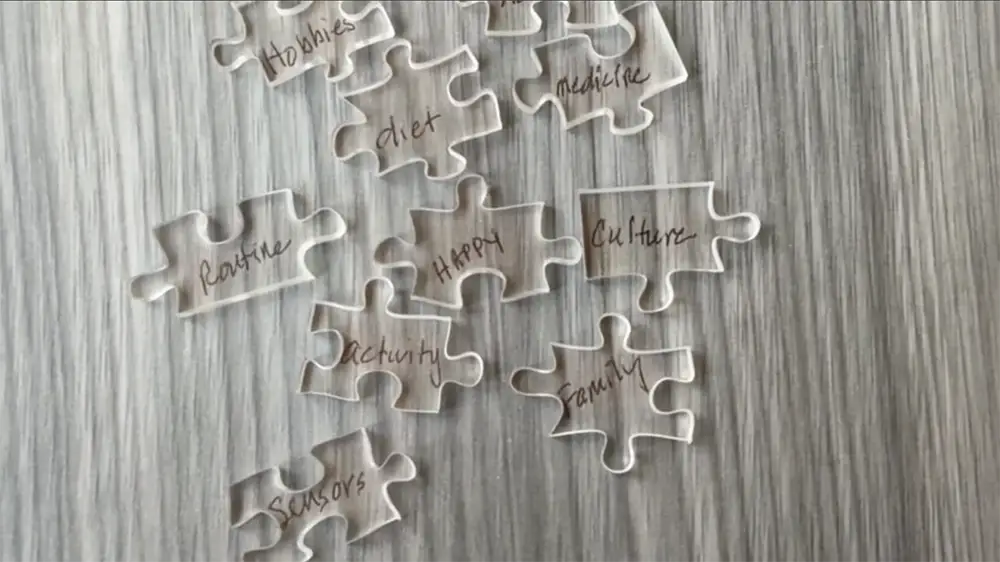
A recommendation to exercise may not account for whether someone has a safe place to walk. Dietary guidance may overlook cost, culture, transportation, or access to a grocery store. Medication instructions may not consider housing instability or whether a patient has a refrigerator.
“I don’t go home with you,” Dzioba tells her patients. “I don’t know what your house looks like. I don’t know how hard it is for you to get food, or how often you can go grocery shopping.”
Now, her approach is to ask rather than assume. She starts with what patients are already doing successfully and what they believe they can realistically change.
“It changes the focus from what I want them to do, to what they think and know that they can do,” she said.
This shift makes treatment planning a more collaborative process, aligning clinical priorities with changes the patient can sustain. “That reality check needs to be there,” Dzioba said. “I can dictate, but if you can’t do it, there’s no point.”
Learning about a patient’s finances, culture, family, fears, goals, and living conditions is therefore not peripheral to treating diabetes. It is essential to developing a plan the patient can realistically carry out, and therefore increasing the likelihood that treatment will be effective.
“Care is only as good as it is catered to the patient themselves,” Carver said.
The Tennessee stories cannot tell students how exactly they need to treat the next patient they have, but they can teach them to look beyond the diagnoses, listen before making assumptions, and approach healthcare more holistically.
A Human-Centered Approach
The Tennessee Diabetes Coalition digital storytelling workshop created space for a different type of dynamic to occur, one that does not often occur in a clinical setting. Time constraints, medical priorities, and differences in authority often limit how much patients disclose in this standardized appointment. In the workshop, participants lead the exchange, speaking openly about the fears, frustrations, and practical barriers that might not surface during a routine visit.
“It was a really unique experience to just get to sit down and be present and hear people,” Carver said. “There’s a lot to be learned about how we deliver healthcare if we had the time and the freedom to just sit back and listen to the patients tell us what they need.”
For Carver, the workshop offered a rare opportunity to listen without a clinical agenda directing the conversation. The completed stories extend that opportunity to students and providers. Although they cannot remove the constraints or hierarchy of a clinical setting, they can reveal what often goes unspoken, and encourage viewers to ask questions that make more room for patients’ concerns and priorities.
For Rachel, shaping her experience into a story revealed how deeply it had affected her. A private person, she originally intended to tell a story about a family member. Once she began writing, however, she found herself returning to the appointment she had experienced at 16.
“Once I put pen to paper, I couldn’t help but tell that story because it felt important,” she said. “I don’t think I even realized how much it had affected me until I started the workshop.”
The group process gave participants space to examine their experiences, recognize patterns, and decide what was most important for others to hear. The completed films allow their voices to be brought to other settings, including healthcare education
“The whole idea is that they’re not just going to sit on YouTube,” Dzioba said. “The whole idea is that these are going to be used.”
Clinical knowledge remains essential. Patients need accurate information, appropriate treatment, and access to qualified diabetes education. Students need to understand physiology, medications, technology, and standards of care. But managing diabetes does not occur only in the exam room. It occurs in grocery-store aisles, workplaces, family relationships, and lives shaped by culture, cost, fear, and hope. Personal stories bring those realities into perspective, centering the human experience–the true heart of healthcare.