A nurse can learn medication calculations from a textbook. They can practice procedures in a simulation lab. They can study pathophysiology, pharmacology, assessment, and evidence-based practice.
But how do we prepare a nurse to walk into a room with a frightened patient?
How do we help a nursing student understand what it means to care for someone whose life experience is very different from their own? How do we give experienced nurses opportunities to reflect on the encounters that have shaped them, not only clinically, but personally? And how do we create healthcare organizations where empathy is more than an aspiration written into a mission statement?
These are educational questions. But they are also human questions.
Over the past several years, these questions have sat at the center of the Nurse Narratives Initiative, a collaboration that brings together StoryCollab, the East Tennessee State University College of Nursing, Ballad Health, the Tennessee Center for Nursing Advancement, and the ETSU Research Corporation.
Now, that work is entering an important new chapter.
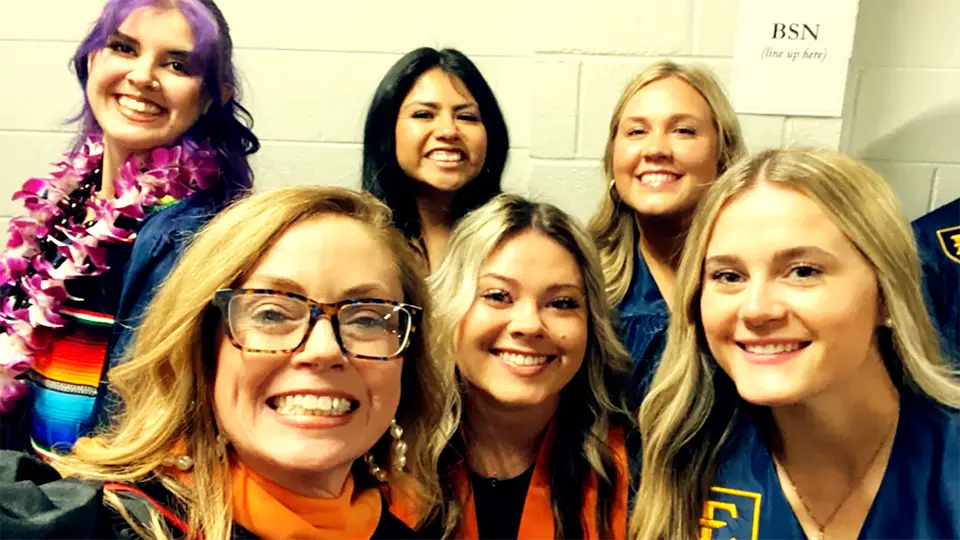
We are proud to introduce the Nurse Narratives Faculty Fellows, a group of educators, scholars, researchers, and clinicians from the ETSU College of Nursing whose creativity, expertise, and leadership have helped develop the Nurse Narratives Initiative and expand what digital storytelling in nursing can make possible.
The designation recognizes faculty who have done much more than participate in a project. These educators help develop, test, teach, study, adapt, and refine approaches that use authentic stories as catalysts for reflection, dialogue, professional identity formation, and empathy in nursing.
Their work points toward something larger: a model in which stories are not simply collected and shared. They become part of how nurses learn, teach, reflect, connect, and care.
Digital Storytelling in Nursing: From a Story to a Learning Experience
At StoryCollab, we spend a lot of time thinking about what happens when people tell stories.
But increasingly, the Nurse Narratives Initiative has asked us to consider what happens after a story is told.
A nurse might participate in one of our digital storytelling workshops, reflecting deeply on an experience from years of clinical practice. A patient might describe an encounter that changed how they understood their own healthcare. A nursing student might tell a story about the moment they began to understand what becoming a nurse would actually require of them.
Each finished digital story has value on its own.
But what happens when that story enters a classroom?
What happens when a faculty member asks students not simply to watch it, but to slow down, listen carefully, examine their assumptions, and reflect on how the storyteller’s experience might change their own approach to care?
That is where a digital story can become something more than and educational media.
It becomes a formative learning experience in empathy.
Through the Nurse Narratives Initiative, faculty members at the ETSU College of Nursing have worked with StoryCollab to create educational activities and reflective experiences built around authentic stories from nurses, students, patients, and families.
Stories can become starting points for conversations about clinical judgment, bias, compassion, communication, professional identity, resilience, community health, trauma, ethics, and the many other human dimensions of nursing that can be difficult to capture on a slide or measure on an exam.
The Faculty Fellows have been essential to that work because they understand both sides of the equation.
They understand stories. They understand nursing education.
Why Empathy in Nursing Requires More Than Talking About Empathy
Most nurses don't need convincing that empathy matters.
It is already embedded in the profession's ideals: listening carefully, seeing the whole patient, respecting dignity, recognizing suffering, communicating with families, and responding to human needs that cannot always be reduced to a diagnosis.
The harder question is how we cultivate those habits consistently.
It is one thing to tell students to be empathetic. It is another to create opportunities for them to practice perspective-taking, deep listening, reflection, and genuine curiosity about someone else’s experience.
Stories can create those opportunities.
A first-person story asks something different of us than a case study.
A traditional case might begin with age, diagnosis, vital signs, laboratory results, medications, and symptoms. Those details are indispensable. Nurses need them.
But a person does not experience healthcare as a collection of clinical variables. They experience fear. Relief. Confusion. Trust. Isolation. Gratitude. Anger. Uncertainty. Hope. They interpret what is happening through their histories, relationships, communities, values, and previous experiences with healthcare.
When students hear those experiences described in another person's voice, clinical knowledge is not replaced. It is given human context. That distinction matters.
Empathy in nursing does not mean feeling sorry for patients or assuming that we know exactly what someone else is experiencing. It requires the harder practice of staying curious about another person’s perspective.
Listening to authentic stories can help make that practice visible.
The Faculty Fellows: Expertise Meets Lived Experience
One reason we are particularly excited about the Faculty Fellows program is the range of expertise these educators bring to the work.
Across the group, faculty members work in undergraduate and graduate nursing education, primary care, rural and Appalachian health, community health, gerontology, clinical simulation, student success, trauma-informed teaching, curriculum development, nursing leadership, research, and professional education.
Empathy is not the responsibility of a single course. It doesn't belong only in an introductory nursing class, an ethics unit, or a lesson on communication.
Empathy can shape how students approach pathophysiology. It can influence simulation. It can change conversations about community health, chronic illness, primary care, vulnerable populations, aging, mental health, and clinical decision-making.
It can also shape how faculty support students as they develop their own professional identities.
- The Nurse Narratives Faculty Fellows help us explore what happens when narrative practices become part of this larger educational ecosystem.
- Their expertise makes it possible to ask practical questions:
- Where does a particular story belong in the curriculum?
- What should students be asked before they watch it? What kinds of reflection should follow?
- How can an educator create enough structure for meaningful discussion without prescribing what students should feel?
- How might an activity work differently with first-semester nursing students than with experienced nurses completing an advanced degree?
These details are important. Simply showing a moving video is not the same thing as narrative pedagogy. The learning comes from what happens around the story.
Digital Storytelling Workshops Are the Beginning, Not the End
Our digital storytelling workshops remain an important part of Nurse Narratives.
In these facilitated spaces, participants identify meaningful experiences, develop first-person narratives, listen to one another, revise their stories, and combine voice, images, music, and other media into short digital pieces.
But the finished video is only one outcome. The process itself requires reflection. Participants have to decide what an experience means to them. They have to choose which moments matter. They listen as peers describe experiences they may never have encountered. They give and receive feedback. They examine how events shape meaning.
That process can be especially significant in healthcare, where people often move quickly from one intense experience to the next. Nurses are trained to respond. Storytelling asks them to pause and reflect.
- What happened?
- What did I notice?
- What was I feeling?
- What assumptions did I bring into that encounter?
- What did another person teach me?
- What has stayed with me?
Those questions matter to the storyteller. But once a story is complete and shared thoughtfully, it can also become a question for other nurses and students. That creates a ripple effect.
One nurse reflects on an encounter. A classroom listens to that nurse's story. Students reflect on their own assumptions. A faculty member develops a new activity. Another educator adapts it to a different course. A conversation that began with one person's lived experience becomes part of how future nurses think about care.
That is one of the possibilities the Faculty Fellows program is designed to cultivate.
Moving Digital Storytelling Beyond the “Soft Skills” Category
Healthcare education understandably emphasizes technical competency. Nurses carry enormous responsibility. Their decisions affect patient safety. They need scientific knowledge, clinical judgment, procedural competence, and the ability to respond under pressure.
But framing empathy, communication, reflection, and listening as separate “soft skills” creates a false division:
- A patient's willingness to disclose information can depend on trust. A family’s understanding of a treatment plan can depend on communication.
- Assumptions about a patient's circumstances can shape a nurse's interpretation of behavior.
- A student’s developing sense of what kind of nurse they hope to become can influence countless decisions long after graduation.
Technical excellence and human connection are not competing goals. The deeper opportunity for digital storytelling in nursing is to help educators bring those dimensions together. Stories can ask students to consider the science of care and the experience of receiving it at the same time.
They can encourage students to look beyond “What is happening clinically?” toward another essential question: “What is happening to this person?”
From Individual Stories to Curriculum
One of the most important developments within the Nurse Narratives Initiative has been the movement from individual storytelling experiences toward curricular integration.
StoryCollab and ETSU nursing faculty have worked together to create educational resources that combine authentic digital stories with reflective writing, facilitated discussion, classroom exercises, and other forms of narrative-based learning. That evolution matters for institutions considering storytelling work of their own.
A collection of powerful stories can be highly valuable. But a sustainable initiative needs people who understand where and how to use those stories. Faculty bring that knowledge.
They know their students. They know course objectives and program outcomes. They understand the realities of crowded curricula and the demands placed on nursing educators. They know any new approach must work not only in theory but in actual classrooms with real students, limited time, competing priorities, and specific educational goals.
That is why faculty collaboration has been foundational to Nurse Narratives. Rather than bringing storytelling into nursing education as something external, we have worked to develop it alongside the people who teach nursing every day. The Faculty Fellows program recognizes that contribution while creating new opportunities to continue learning from it.
What This Model Could Mean for Other Nursing Schools and Healthcare Organizations
The Faculty Fellows program is rooted at ETSU, but the questions behind it are much broader.
Healthcare systems nationwide are thinking about workforce well-being, professional identity, patient experience, communication, retention, trust, and organizational culture.
Nursing schools are thinking about how to prepare students not only to pass exams and demonstrate competencies, but to enter demanding clinical environments with a strong sense of purpose and the ability to connect with the people they serve.
Hospitals and health systems are looking for meaningful ways to strengthen relationships among clinicians, patients, families, and communities.
Digital storytelling can contribute to those efforts, but we believe the strongest work happens when storytelling is connected to a larger strategy:
- For one organization, that might begin with digital storytelling workshops for nurses.
- For another, it might mean incorporating patient stories into professional development.
- A nursing school might integrate digital stories and reflective activities across several courses rather than confining them to one class.
- Another institution might invite faculty to create their own stories before developing narrative activities for students.
- Healthcare leaders might use stories to create conversations across roles and departments that rarely have opportunities to listen to one another.
The form can change. The underlying practice remains remarkably consistent: create space for authentic experience, listen closely, reflect deliberately, and connect what is heard back to the work of caring for people.
Creating Space for Reflection in a Profession Built Around Action
Nursing is a profession of action: Assess, decide, respond, document, communicate, reassess, move to the next patient. Begin again.
That capacity for action saves lives. But a profession built around constant response also needs places for reflection. Without reflection, significant experiences can accumulate without ever being fully examined. Lessons can remain implicit. Moments of connection can disappear into the pace of the next shift. Difficult encounters can become something to push through rather than something individuals and institutions can learn from.
Storytelling changes the pace. It asks people to stay with an experience long enough to understand it. For a student, that might mean recognizing an assumption for the first time. For an experienced nurse, it might mean revisiting an encounter that has influenced years of practice.
For an educator, it might mean hearing nursing through a student's perspective. For an administrator, it might mean encountering the lived consequences of systems and policies from the point of view of someone working inside them.
Stories do not automatically solve these challenges. But they can create the conditions for conversations that might otherwise never happen.
A Community of Practice Around Stories
Ultimately, the Nurse Narratives Faculty Fellows program celebrates people. It recognizes nursing faculty members who have been willing to experiment, reflect, collaborate, and imagine new approaches to education.
It also represents our belief that sustainable change rarely comes from dropping a new resource into an organization and walking away. It grows through relationships.
StoryCollab brings expertise in collaborative, trauma-informed storytelling and digital storytelling workshops. Nursing faculty bring deep knowledge of education, scholarship, clinical practice, students, and the profession itself. Nurses, patients, families, and students bring something no curriculum designer can manufacture: lived experience. When those forms of expertise meet, stories can begin to move:
- From a hospital room into a workshop.
- From a workshop into a digital story.
- From a digital story into a classroom.
- From a classroom into reflection.
- And from reflection back into practice.
The Faculty Fellows have helped build those bridges. We are proud to recognize their contributions, and we are even more interested in what comes next.
Building More Human-Centered Healthcare, One Story at a Time
When we talk about empathy in nursing, it is easy to speak in abstractions: Compassion. Connection. Presence. Understanding.
Stories make those words concrete. They give us a particular nurse, a particular patient, a particular room, a particular moment. They remind us that healthcare ultimately occurs between people. That idea is at the heart of the Nurse Narratives Initiative and at the heart of the new Faculty Fellows program.
We believe nursing education can create more opportunities for students to encounter authentic lived experience. We believe nurses deserve spaces to reflect on the experiences that shape their professional lives. We believe patients and families have knowledge that healthcare organizations need to hear. And we believe stories can help institutions connect those perspectives in ways that deepen learning and strengthen relationships.
The Nurse Narratives Faculty Fellows help us explore how to turn those beliefs into educational practice. We appreciate their leadership, scholarship, creativity, and willingness to build this work alongside us. We look forward to what we will learn together.
Explore the Nurse Narratives Faculty Fellows to meet the educators helping shape this work.
If your school of nursing, healthcare system, university, or organization is interested in using digital storytelling in nursing, developing empathy-centered educational resources, creating reflective learning experiences, or designing digital storytelling workshops for healthcare professionals, we would welcome the opportunity to start a conversation.