


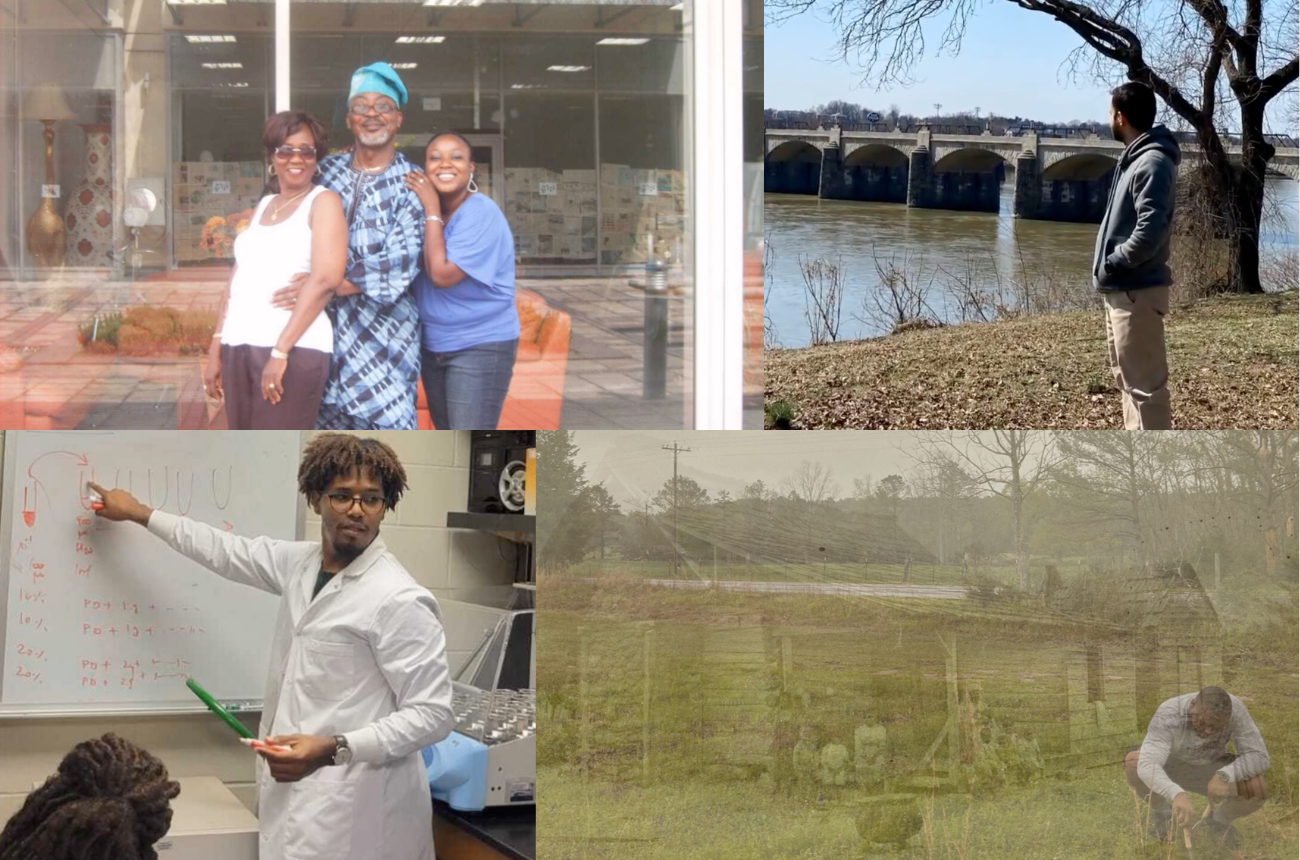
Digital Storytelling, Food Systems, and Partnership with Tuskegee University, CISC, and INFAS
If we want a different food system, one grounded in equity, sustainability, and community, we have to be willing to tell different stories.
That idea feels obvious when we say it out loud. But most of us were trained inside systems that quietly taught us something else. Data is serious. Methodology is serious. Publications are serious. Stories are often treated as something softer. Something you add later, once the real work is done. Maybe not at all.
The longer we work alongside food systems researchers, farmers, students, and community partners, the less that separation holds up.
Food systems are not abstract. They are a fabric of weather and soil, markets and families, policy and survival. Behind every dataset is a human decision. Every intervention is a story about why someone believed change was necessary in the first place.
As Christine Porter, a scholar, organizer, and INFAS leader, said, “If you want a different outcome, tell a different story.”
It’s not a slogan. It’s a challenge. And the idea stayed with us throughout our recent virtual digital storytelling workshop with graduate CHFP Fellows from Historically Black Colleges and Universities. The workshop was made possible through collaboration among StoryCollab, Tuskegee University’s Carver Integrative Sustainability Center, and the Inter-institutional Network for Food, Agriculture, and Sustainability.
We gathered to make stories. But more than that, we gathered to make space. Space for reflection and context. For memory. And space for the complicated human desires to do this work in the first place.
A Partnership Grounded in Mission and Place
The best partnerships aren’t transactional: one organization providing a service while another organization receives it. Great partnerships are relationships. They can come together quickly, or they’re cultivated over time, through common values, shared risk, and mutual curiosity about what’s possible if we do things differently.
Tuskegee University has long been a leader in advancing food systems research, education, and extension through its College of Agriculture, Environment and Nutrition Sciences, the George Washington Carver Agricultural Experiment Station, and the Carver Integrative Sustainability Center. As an 1890 land-grant institution, Tuskegee’s work thrives at the intersection of research, education, and service. The work supports farmers and improves nutrition. It strengthens environmental stewardship locally, nationally, and globally.
The Carver Integrative Sustainability Center plays a central role in that work. The Center advances sustainable food systems by empowering small and underserved farmers, ranchers, and communities through science-based research, education, and extension. The work is technical, rigorous, and deeply human.
INFAS situates this work within a broader national network committed to transforming food systems through equity-centered research and collaboration. Through the CISC-INFAS HBCU Graduate Fellowship Program (CHFP), INFAS invests directly in graduate students pursuing advanced degrees across food systems, agriculture, natural resources, agricultural law, and related fields. The fellowship provides financial support, mentoring, professional development, and opportunities for Fellows to present research nationally and build professional networks that will shape their careers for decades.
From the beginning, the partners who brought this workshop together have understood storytelling as a way to deepen the work already happening. A way to support Fellows not only as researchers, but as communicators, advocates, and future leaders in food systems transformation.
They believe that leadership in food systems is driven by more than technical knowledge. It’s also driven by sensitivity to the unique, hands-on experiences of people all over the world. This sort of leadership requires the ability to explain complex ideas and scientific research to people who live with the consequences of those ideas every day. It requires the ability to listen across differences and to inspire scientific rigor within a world of stories.
Why Digital Storytelling Belongs in This Fellowship
Graduate Fellows produce rigorous, important research. Much of that work lives in places most people never see. Academic journals. Conference presentations. Internal reports. These outputs are essential. They are how scientists and academics validate, share, and advance knowledge within food systems research.
But these articles and presentations are not always how knowledge becomes meaningful to broader communities. Lindsey Lunsford of Tuskegee University named this tension clearly: “You can publish research articles, but there’s a very limited audience of who’s gonna read those. But when it comes to a story, there’s power in being able to just send someone a link or hit play, and someone sees a story. That can create impact, understanding, connection, all the things that stories can do.”
Research can be valuable and powerful on its own. But connecting research with stories translates information into ideas and challenges that people encounter every day.
Most researchers know that everything they study emerges directly from functioning food systems. Somewhere along the way, that information gets abstracted and translated into numbers and jargon. These scientific conventions allow researchers to investigate challenges and opportunities with profound complexity and scale. They make it possible for research to be valuable even while divorced from stories.
Left as data and jargon, it’s difficult for that research to realize its full potential. In order to affect the tangible machinery and human processes of food systems, scientists need to simplify that complexity and humanize the scale. That’s hard to do. Tuskegee and the Carver Center recognize the necessity of storytelling. They see that stories can’t replace research. But they can extend and translate it. Stories invite people into the research.
There was precedent. INFAS had previously partnered with StoryCollab on storytelling work with Tribal Fellows. Those participants left with something durable. Something they could use in classrooms, community work, and professional contexts long after the fellowship ended.
As Lindsey reflected, “They had that gift, something they could keep. And it was long-lasting. We wanted to give that to our fellows.”
By creating first-person digital stories to share intimate, small-scale experiences, the Tribal fellows borrowed a trick from researchers. Digital storytelling can be a strategy for liberating oral storytelling from the need to share a physical space. While that might be the ideal condition for sharing a story, creating a digital story can reach a more diverse, wider-reaching audience.
From Abstract Systems to Lived Experience
Food systems are often taught as large-scale structures. Supply chains. Policy frameworks. Production models. All of that matters. But food systems are also lived through meals, labor, land, water, and care.
One of the most powerful shifts we witnessed during the workshop was Fellows moving from seeing food systems as distant or theoretical to understanding them as deeply personal and relational. Natilee McGruder Kyle described this shift: “We really value having scientists and folks who are hard science heavy and introducing them to what it means to be an advocate for the food system. They don’t always see themselves that way when they come into the fellowship.”
Stories gave Fellows a way to connect technical knowledge to lived purpose. They allowed them to articulate why their research mattered, not only academically, but personally and socially. As Lindsey said, “When these Fellows hear different stories, they can start to see themselves, and their unique story as fitting in.”
As Fellows developed their stories, a pattern emerged. Again and again, research trajectories led back to family kitchens, ancestral land, mentors, and memory.
Lindsey described witnessing this with a kind of quiet awe: “It took more than just themselves to get here. It took a village, people pushing and praying, and even people who aren’t here anymore.”
Storytelling became a way of honoring those histories. “They couldn’t tell their story without talking about their mom, their uncle, their grandma,” Lindsey said. “And the pride they had in putting it in the digital age, telling their story on YouTube, was powerful.”
These moments reinforced something we see again and again. Knowledge does not emerge in isolation. It emerges through families, communities, and generations of people who may never appear in a research citation but whose influence shapes everything that follows.
“I Didn’t Think I Had a Story”
Perhaps the most striking insight came from the Fellows themselves. Many entered the workshop believing they had nothing worth telling.
Natilee shared, “Several people said, ‘I didn’t think I had a story in me to tell.’”
That statement surfaced repeatedly. Sometimes in surveys. Sometimes in closing reflections. Sometimes in quiet, one-on-one conversations. It did not come from a lack of experience or meaning. It came from years of training inside systems that often reward technical precision, data clarity, and methodological rigor while leaving little room for personal narrative, emotional context, or lived experience.
In highly technical fields like food systems science, agricultural research, microbiology, nutrition, and agricultural law, storytelling can feel out of place. Many Fellows arrived with the implicit understanding that stories belong somewhere else. Marketing departments. Public relations offices. Maybe community outreach. Not in research. Not in science. Not in serious academic work.
But food systems resist that separation.
As Lindsey reflected, “The way people act and do things is based on the way they understand the world. And the way we see our world is often informed by the stories that we tell ourselves.”
Every food system, no matter how global, ultimately runs through local human experience. Farmers decide what to plant after a season of unpredictable weather. Fishermen read changes in currents and fish movement long before data models catch up. Families adjust what and how they eat in response to price changes, crop failures, or new health information.
Food systems are where science meets lived experience. They are where research findings meet memory, culture, labor, and survival. Farmers and fishermen often recognize problems first through hands-on experience with land and sea, sometimes long before those problems appear in formal datasets. And just as often, they develop creative, practical solutions that no spreadsheet alone could predict.
Stories are not separate from science in this context. It is one of the ways science stays connected to reality.
Through the storytelling process, Fellows began to recognize that their own experiences, family histories, health challenges, community ties, moments of doubt, and moments of pride were not distractions from their research. They were part of what shaped their questions, their persistence, and their vision for what food systems could become.
And when Fellows began to tell those stories, something else happened.
Natilee described watching this shift unfold:
“Even they were somewhat startled by their own depth, by their own need and desire to share certain aspects of themselves. Maybe by their own bravery. We saw emotional and powerful connections.”
Stories do more than help other people understand us. They help us understand ourselves. They help us see patterns in our lives. They help us recognize why certain research questions matter to us more than others. They help us understand what we are trying to change and for whom.
For many Fellows, storytelling became an act of self-recognition. Seeing their story reflected back to them was not only affirming. It was clarifying. It helped them see themselves not only as students or researchers, but as participants in a much larger, intergenerational, and global story about food, health, and community survival.
Storytelling also expanded how Fellows saw each other. As Lindsey noted, “When these Fellows hear different stories, and they get the chance to hear from different people, and see different walks of life, people that are academics, people that run newsletters about food systems, all these people play a role. They can start to see themselves and their unique story as fitting in.” This recognition mattered deeply, not only on a personal level, but on a systems level.
Complex systems require complex thinking. And complex thinking requires a diversity of perspectives, lived experiences, disciplinary approaches, and problem-solving strategies. Food systems will only become more sustainable, more efficient, and more humane if they continue to integrate multiple ways of knowing. Scientific. Experiential. Cultural. Community-based.
Through storytelling, Fellows began to see diversity of experience not only as a social value, but as an intellectual and scientific necessity.
Impact Beyond the Workshop
For many institutions, storytelling is treated as an endpoint. In this collaboration, stories became multi-use tools.
They are now included in federal reporting, institutional communications, recruitment, and teaching. They extend the fellowship beyond the program year and provide Fellows with professional assets they can continue to use.
As Lindsey put it, “I don’t want to be wasteful. Get all the nectar out of the fruit. Don’t leave the meat on the bone.”
This philosophy reflects something larger. When institutions invest in people, not just outputs, returns multiply. Fellows gain communication skills. Institutions gain authentic narratives. Communities gain access to research that affects their daily lives.
Authenticity Requires Partnership
This work is successful because it is a collaboration. As Natilee said, “Authenticity requires partnership and deep relationships.” These workshops are not driven by storytelling about Fellows. They are storytelling with them — co-created, responsive, and grounded in trust.
Authentic partnership takes time. It requires listening. It requires a willingness to share credit. It requires a willingness to adapt processes to people, rather than forcing people to adapt to processes.
An Abundance of Stories
Christine Porter rejected scarcity. Scarcity of ideas. Scarcity of credit. Scarcity of possibilities. She believed that sharing knowledge openly drives greater progress.
These stories are not about showcasing institutions. They aim to reveal the people already shaping our food system.
As Lindsey reflected, “You don’t know these people. You don’t know how hard they’ve fought to be here.”
Stories make that visible.
Looking Forward
This collaboration reaffirms something we believe deeply. When institutions invest in stories as leadership development, the impact ripples outward.
If we want a different outcome for our food system, we must be willing to listen differently. To center lived experience alongside research. To partner across institutions and communities.
The stories created through the Tuskegee, CISC, and INFAS fellowships are an invitation. To funders. To higher education partners. To institutions asking how better to support the next generation of food systems leaders. And most importantly, they are a reminder. If we want a different future, we have to be willing to tell and hear different stories.
Honoring a Vision: Christine Porter
This project carries forward the vision of Christine Porter, scholar, organizer, and INFAS leader. Her work consistently asked what it means for higher education to engage food systems work ethically and in genuine partnership with communities.
Christine understood something that can be easy to forget inside academic systems. Research only changes the world if people can understand it, connect to it, and see themselves inside it. She deeply believed in first-person voice, lived experience, and storytelling as a bridge between scholarship and public understanding.
She had previously collaborated with StoryCollab on digital storytelling initiatives. She envisioned storytelling as a meaningful component of the HBCU Graduate Fellowship Program, both as a communications tool and as a leadership and reflection practice.
After her passing, colleagues felt a responsibility to continue that work, not out of obligation, but out of alignment.
As Lindsey shared, “We wanted to do it to honor Christine. When it got hard, the bigger ‘why’ was that we wanted to honor Christine’s wishes. She knew why she wanted to do it.”


%20-%2001.png)